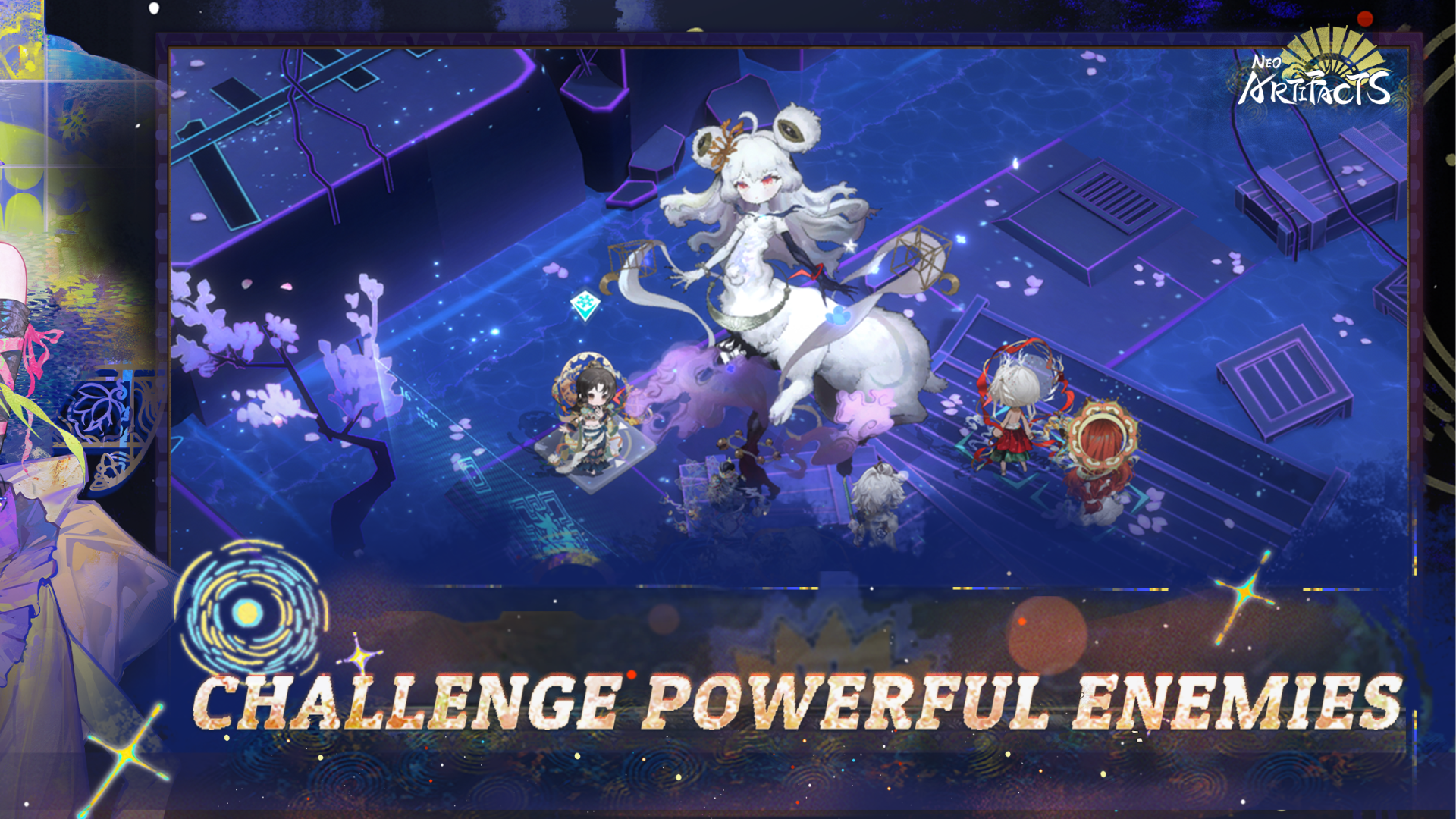
Neo Artifacts Grid & Positioning: Flanking, Height, And Cover Tips For New Players
Neo Artifacts rewards smart grid play more than raw stats: hugging chokepoints, abusing height, and using cover correctly will win you fights that auto-battle and brute force lose. New players who treat maps like small tactical puzzles rather than just “walk forward and attack” get the biggest power spike for zero extra investment.
Grid fundamentals and flanking basics
Neo Artifacts uses an isometric, tile-based grid where each Artifacter moves a fixed number of tiles per turn based on their Action Points (AP). A Striker with 3 AP, for example, can move up to 3 tiles before acting, while slower front-liners move fewer tiles and naturally anchor your formation.
Flanking in this system is about threatening enemies from multiple angles, not just standing behind them. High-mobility units with 3+ AP are ideal for swinging around an enemy’s front line to hit backline targets or force them out of cover. If you send a single melee too deep without support, you’ll just get counter-flanked and deleted on the enemy turn.
Flanking checklist
| Goal | What to do | Why it works |
|---|---|---|
| Break enemy front line | Use a high-AP Striker to move around a tank and hit a backline target, while your own tank pins the front | Splits enemy focus and forces them to choose between saving their backline or holding the choke |
| Punish overextension | When an enemy moves too far forward, collapse on them from two sides with melee + ranged | Forces them into a bad tile where they eat multiple attacks next round |
| Avoid getting flanked | Keep your backline one tile behind your frontline and avoid forming long “L” shapes that expose your edges | Makes it harder for enemies to reach squishy units with a single move |
Height and elevation: abusing high ground
Official descriptions and gameplay footage emphasise that “diverse terrain and elevation create a wealth of tactical possibilities,” and ranged units benefit the most from height in Neo Artifacts. Sniper-style Artifacters like Starry Night can leverage elevated tiles to attack from extreme distances while staying out of most enemy threat ranges.
Height mainly affects:
- Attack range: Ranged units on high ground often reach targets that would be out of range from flat ground.
- Line-of-sight: Elevation helps shoot over low obstacles that would otherwise block attacks.
- Safety: Melee enemies may need an extra turn to climb or go around, giving you more time to focus fire or reposition.
Height usage tips
| Situation | Optimal play | Source |
|---|---|---|
| Starting on a map with visible ledges | Move at least one ranged DPS to a high tile on turn 1 and park them there as a turret | CBT walkthrough |
| Enemy ranged units on high ground | Use your own high-mobility Striker to reach their platform or bait them down by leaving a reachable target | OSLink mobility notes |
| Boss maps with central elevation | Fight from the rim, not the middle — keep your DPS on the lip while your tank contests the boss at ground level | Game8 gameplay overview |
If you’re not sure whether height actually benefits you on a given tile, check your attack preview: if your range or target list expands when you step onto a raised tile, you’ve found a good spot for your ranged Artifacters.
Cover, chokepoints, and danger zones
Terrain pieces like pillars, walls, display cases, and narrow museum corridors function as cover and chokepoints in Neo Artifacts. Using them properly lets you control where fights happen and how many enemies can hit you at once.
Key principles:
- Tanks on chokepoints: Place your toughest unit in doorways or narrow corridors so only one or two enemies can reach them per turn.
- Backline behind cover: Keep healers and snipers one tile behind solid objects; this blocks direct lines for most ranged attacks and forces enemies to reposition before shooting.
- Edge-of-range baiting: Move your front-liner just to the edge of enemy threat tiles so enemies step into your kill zone on their turn, then collapse on them when your turn comes back.
Cover and chokepoint examples
| Situation | Optimal positioning | Source |
|---|---|---|
| Enemy melee rush | Tank stands in the narrowest path; supports and DPS stack directly behind with no side gaps | Combat guide positioning |
| Mixed melee + ranged enemies | Spread backline units out so AoE hits fewer allies, but keep each behind some form of cover | CBT footage |
| Dangerous AoE boss | Rotate the unit that just tanked the hit out of the danger tiles and move a fresh body into the front before the next AoE | Combat guide |
Remember that the game shows “danger zones” when you select enemy units, highlighting every tile they can hit on their turn. New players should make a habit of checking those zones before moving — standing one tile outside them while still attacking is usually the optimal play.
Putting flanking, height, and cover together
The strongest Neo Artifacts turns combine all three concepts in a single plan: you hold a chokepoint with a tank, park your ranged DPS on high ground behind cover, and send a fast Striker around the flank only when you know the enemy cannot punish them next turn.
A simple, repeatable pattern for new players:
- Scout the map: At the start of combat, pan around to find high ground, narrow corridors, and obvious cover pieces.
- Anchor your frontline: Move your toughest unit into the best chokepoint the map offers; treat this as your “pivot” tile.
- Claim high ground for DPS: On turn 1–2, move your ranged Artifacters to elevated tiles behind or near the frontline rather than rushing them forward.
- Use flanking opportunistically: Only send a flanker around the side when enemies have already committed into your choke and your turn order shows that your flanker will act again before most enemies.
- Respect danger zones and attribute matchups: Stay just outside enemy reach with fragile units, and always prioritise targets where you have elemental advantage.
Because auto-battle does none of this — it ignores height, stands in bad tiles, and overextends constantly — you should switch to manual control for any map where you care about full rewards, 3-star clears, or pushing as far as your account can go.