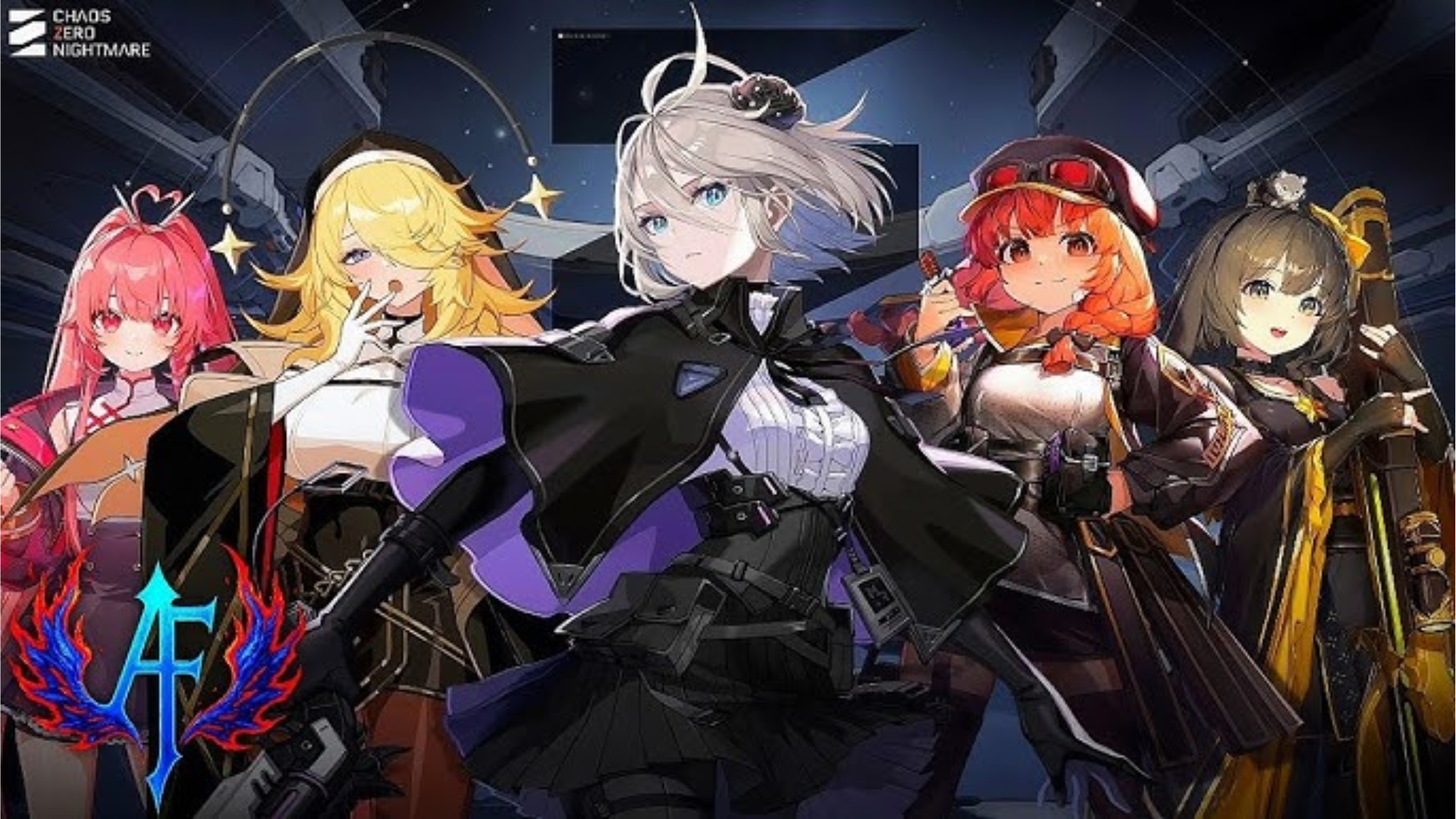
Chaos Zero Nightmare splits characters into weapon classes (Striker, Vanguard, Hunter, Ranger, Controller, Psionic) and then overlays team roles (main DPS, sub‑DPS/debuffer, support/defender). Understanding both layers is what lets you balance damage, survivability, and card economy in a three‑unit team.
Class archetypes (what each class actually does)
Community testing shows that “classes” mostly define attack style and neutral card pool, while the real role comes from the character’s kit.
- Striker – melee DPS
- Focus: close‑range damage, self‑buffing, and damage loops.
- Typical mechanics: self‑ATK buffs, follow‑ups, zero‑cost spam, or retain/exhaust combos to ramp damage.
- Example roles: main single‑target DPS or AoE bruiser, often needs supports for AP, card draw, or survival.
- Vanguard – tank / counter
- Focus: mitigation, shields, taunts, and counterattacks.
- Often provide team‑wide shields or damage reduction; some non‑Vanguard units (like certain DPS) can still offer party shields, just less efficiently.
- Ideal as your frontline / defender, protecting squishier DPS while contributing chip damage via counters.
- Hunter – single‑target ranged DPS
- Focus: gun/bullet mechanics, repeated hits, and single‑target pressure.
- Many Hunters build and consume “bullets” or similar stacks and shine in bossing and Tenacity breaking.
- Ranger – ranged burst / AoE DPS
- Focus: ranged attacks that cover multiple enemies or wide hit patterns.
- Community notes they often serve as supporting DPS, not purely single‑target; think waveclear and AoE burst rather than boss tunneling.
- Controller – support / utility caster
- Focus: buffs, debuffs, AP manipulation, healing, and control.
- Typical tools: card draw, cost reduction, Morale buffs, Weakening enemies, shields, or heals, making them ideal supports or sub‑DPS debuffers.
- Psionic – magic DPS / hybrid
- Very few in the roster, but they generally generate and consume special cards, enabling explosive turns when piloted correctly.
- Often play as hybrid main DPS / enabler depending on deck construction.
Because kits vary, guides repeatedly stress: “the framework is generally accurate, but always review the cards to determine their true playstyle.”
Functional team roles (how the game expects you to build)
Regardless of class, good teams hit three functional roles.
- Main DPS
- Your primary damage dealer; defines your entire deck’s direction (bullets, mark/follow‑ups, zero‑cost spam, exhaust loops, attribute exploitation, etc.).
- Should get most upgrades and be built around by supports (AP, card draw, buffs).
- Sub‑DPS / Debuffer
- Adds extra damage and amplifies the main DPS through debuffs like Weaken, marks, Vulnerable, or Tenacity shred.
- Frequently a Controller, Hunter, or hybrid DPS who can still contribute substantial damage.
- Support / Defender
- Handles survival and card economy: healing, shields, AP generation, card draw/retain/exhaust synergy, Stress management, and emergency tools.
- Often a Vanguard or Controller, but some DPS kits (e.g., shield‑sharing or AP refund) can fill parts of this role.
Most guides recommend 1 main DPS + 1 sub‑DPS + 1 support/defender as a default template for almost all content.
Balancing roles: what “good balance” actually looks like
A balanced comp isn’t just 3 different labels, it’s about mechanic coverage.
- Damage and Tenacity break
- Ensure your main DPS plus sub‑DPS can reliably break Tenacity bars (via multi‑hit bullets, mark follow‑ups, or big passion/weakness hits) and then capitalise on Breakthrough windows.
- Survival and Stress control
- Your support/defender should provide enough shields/heals and maybe Stress mitigation so that you don’t hit Mental Breakdown quickly in longer fights.
- Card flow and AP economy
- Good supports match their tools to the DPS mechanic:
- Zero‑cost spam → card draw and cost reduction.
- Exhaust/curse decks → units that generate/benefit from Futility/curse cards.
- Bullet decks → AP regen and card cycling.
Team guides show that when these three pillars are met, even non‑meta characters clear content reliably; when one is missing (no tank, no AP support, no debuffs), difficulty spikes sharply.
Practical tips for using archetypes in team building
- Start from your main DPS, not from class labels
- Pick the unit whose mechanics you enjoy (Striker brawler, Hunter bullets, Psionic combo caster), then build the rest of the team to feed that kit.
- Use class synergy for Partners and passives
- Some Partners give class‑based bonuses (e.g., Vanguard partner boosting Vanguard combatant DEF‑based damage), so matching Partner class to Combatant class squeezes extra value.
- Don’t over‑stack pure DPS
- Beginners often try 2–3 main DPS units and lack shields, AP, or debuffs; guides recommend swapping one DPS for a Controller or Vanguard to stabilise.
- Remember that roles can flex by content
- For farmable, easy content you can replace the tank with another sub‑DPS; for hard bosses, you may prefer a sturdier Vanguard or more healing.
Viewed this way, Chaos Zero Nightmare’s “classes” are flavour and card‑pool hints, while the real balance comes from ensuring you always have a coherent main DPS, an enabler, and a protector/card‑engine in every three‑unit lineup.